The Ceramic Mask
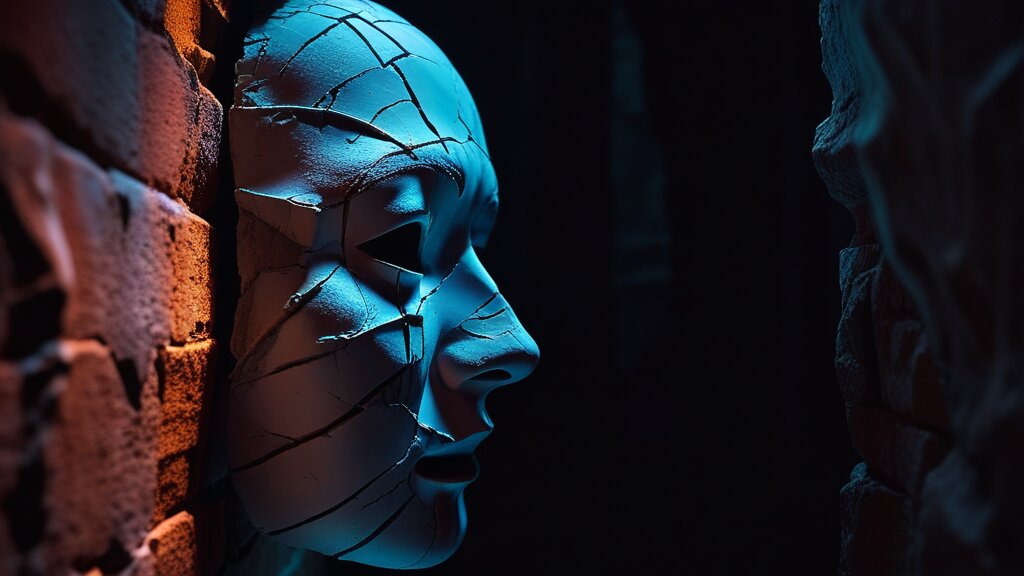
Riot: You know that feeling when you’re at a party, or a meeting, or even just at the grocery store, and you can feel your face freezing into a shape that isn’t yours? That’s the mask. It’s a beautiful, cold, ceramic shell that we build to protect ourselves from a world that doesn’t understand our intensity.
But here’s the problem: the mask doesn’t just protect you. It smothers you. Every minute you spend manually calculating your eye contact, matching your tone to the room, and suppressing your stims is a minute you aren’t actually alive. You’re just a high-fidelity robot running a “Normal Person” simulation. And that simulation is crashing your hardware.
The Mechanical Performance
Masking is mechanical. For most people, social interaction is like breathing—it just happens. For us, it’s like operating a manual transmission while playing a violin and trying to solve a Rubik’s cube in your head.
The Components of the Performance:
- Tone Modulation: Manually adjusting your volume and pitch so you don’t sound “too flat” or “too intense.”
- Scripted Empathy: Using pre-made phrases like “That sounds hard” or “I’m so sorry” because your natural reaction (data-sharing or silence) is seen as rude.
- The Stifle: Holding back the need to rock, flap, or pace because it might “make people uncomfortable.”
Riot’s Real Talk: If your existence makes people uncomfortable, that’s their problem, not yours. Your joy is more important than their comfort.
The Theater of Exhaustion
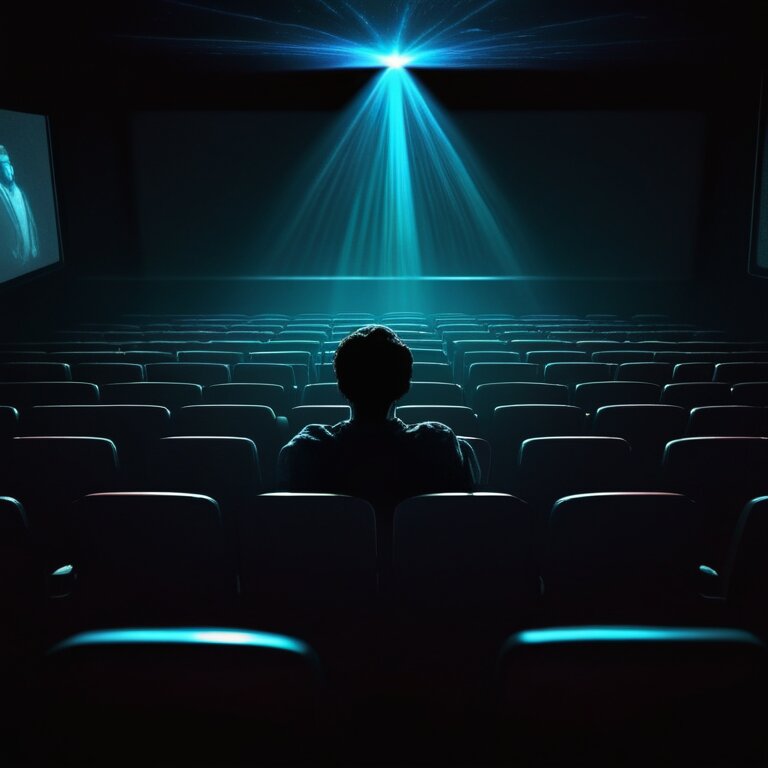
Imagine sitting in an empty theater, watching a hologram of yourself acting out a perfect life. That’s what masking feels like. You’re the audience of your own performance, watching yourself do and say the things you think you’re “supposed” to do, while the real you is sitting in the dark, exhausted and drained.
This leads to a specific type of fatigue that neurotypical people don’t understand. It isn’t just “social burn.” It is Identity Loss. When you mask long enough, you start to forget what you actually like, what you actually think, and who you actually are.
The Unmasking Ritual
Unmasking isn’t something that happens once. It’s a ritual. It’s a physical, emotional, and social process of reclaiming your terrain.
- Find Your Safe-Zone: You can’t unmask everywhere at once. Find one space—your room, a specific friend group, a dark EDM club—where the mask is allowed to stay off.
- Practice the ‘Hard Stare’: Stop fearing the eye contact game. Look wherever your brain needs to look to process information. If that’s the floor, look at the floor.
- Release the Stims: Let your body move. Rocking isn’t ‘weird’; it’s neural regulation. It’s how your brain stays stable in a high-vibration world.
- Communal Liberation: Find other neurodivergent people who are also unmasking. There is nothing more powerful than a room full of people who have all agreed to stop pretending.

Living at High-Vibration
When you take the mask off, you don’t just “feel better.” You become powerful. Your energy isn’t being drained by the simulation anymore, so it starts flowing into your real life. Your special interests become more intense. Your joy becomes louder. Your connection to the world becomes more authentic.
Riot’s Manifesto:
- I will not perform empathy to appease your social anxiety.
- I will not stifle my body to fit your visual norms.
- I am not a “project” to be fixed; I am a protagonista to be celebrated.
- The mask is dead. Long live the real me.
Key Data Points for Unmasking:
- Masking Cost: Up to 3.5x higher cognitive load than authentic interaction.
- Recovery Time: Every 1 hour of high-fidelity masking requires 2 hours of sensory-deprived recovery.
- Identity Shift: Unmasking usually triggers an “Authenticity Spike” where your special interests become significantly more intense.