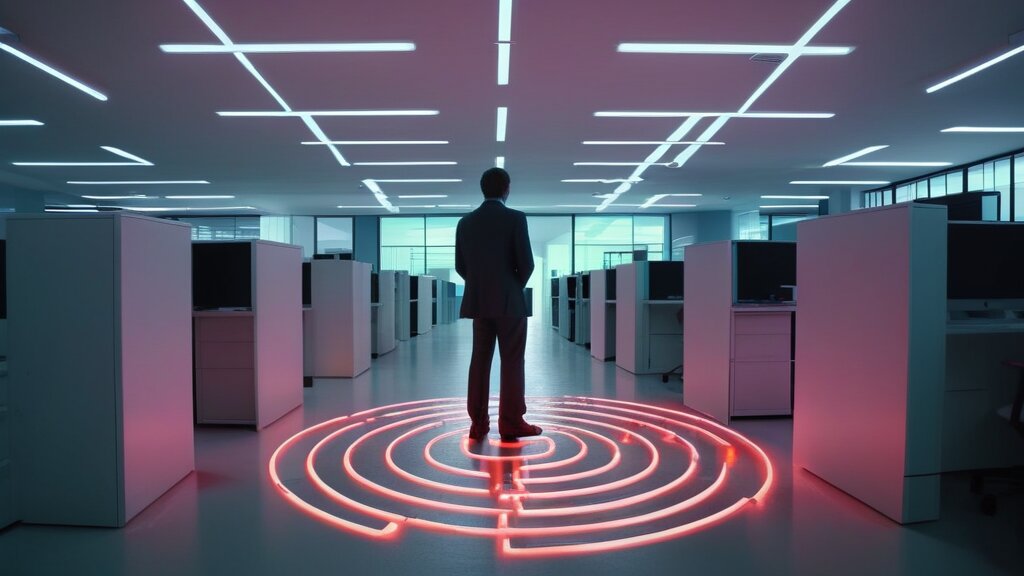
The Office Labyrinth
From a logistical standpoint, the modern office is a collection of conflicting variables and low-resolution design. High-wattage lighting, overlapping acoustic signals, and the unpredictable social requirements of ‘open-plan’ architecture create a simulation that is statistically hostile to autistic hardware. It’s not rocket appliances; it’s bad engineering.
We do not view the workplace as a social club or an NPC meetup. We view it as a Labyrinth that must be navigated using clear, data-driven protocols. Your goal is not to “fit in” but to optimize your uptime and defend your metabolic bandwidth against a worst-case Ontario system crash.
The Strategic Filter: Hardware Defense
Your primary hardware vulnerability in the workplace is sensory overload. To maintain high-fidelity professional output, you must implement the Strategic Filter Protocol.
1. Acoustic Isolation (The Firewall)
If your simulation environment has a noise floor above 40dB, your CPU processing speed will degrade. I recommend high-fidelity earplugs or active noise-canceling hardware. These are not ‘courtesy’ devices; they are the external firewall for your nervous system.
2. Visual Calibration
Direct fluorescent lighting is a known system irritant. If you have any control over your workspace nodes, replace overhead lighting with directional, warm-spectrum lamps. If you cannot change the lights, polarized lenses (FL-41 tint) can significantly reduce the neurological cost of visual data input.
Managing Energy Bandwidth
In the professional context, “productivity” is directly linked to “energy availability.” You have a finite daily budget of executive function.
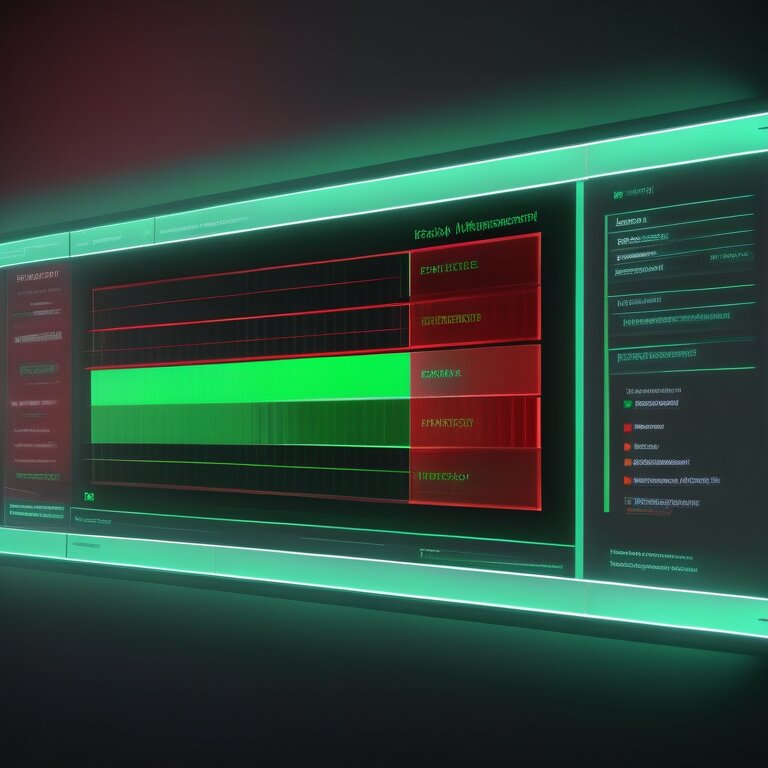
The Bandwidth Interface:
- Project Deadlines: These are static costs.
- Social Complexity: Meetings, small talk, and “culture” are variable costs.
- Sensory Load: This is a constant drain.
Your job is to monitor these bars in real-time. If your ‘Social Complexity’ bar is in the red after a three-hour meeting, you must immediately execute a ‘Low-Bandwidth’ block—90 minutes of focused, solo work with zero interruptions.

The Professional Disclosure Protocol
Should you disclose your autism at work? This is a technical decision, not an emotional one.
Disclosure is recommended when:
- The lack of accommodations is causing a measurable decline in your performance.
- You require specific physical changes (e.g., moving to a quieter desk) that require HR approval.
- You have a manager who prioritizes data-driven results over social compliance.
The Negotiation Strategy: When disclosing, do not lead with “I am autistic.” Lead with “I have a specific neural processing profile that requires a high-fidelity environment to maintain peak output.” Present a technical document—a ‘User Manual for Leviticus’—that lists the environment changes required and the resulting increase in productivity.

The Victorious Exit: Career Integration
A successful career is one where your autism is treated like a specialized toolset rather than a bug. By engineering your environment, managing your bandwidth, and being strategic about your disclosure, you move from “surviving the job” to “mastering the career.”
You leave the office at 5:00 PM with your nervous system intact. You have met your metrics, protected your battery, and maintained your radical independence.
Workplace Performance Metrics:
- Sensory Threshold: Must be maintained above 80% to avoid executive dysfunction.
- Meeting Limit: Maximum of 120 minutes per day before mandatory recovery.
- Social Cost: Small talk is a low-value, high-energy expenditure. Limit to necessary professional pleasantries.