The AuDHD Engine (Conflict in the Code)
Leviticus: From a mechanical perspective, AuDHD (the co-occurrence of Autism and ADHD) is a Dual-Core System running two conflicting operating systems. One core (Autism) requires extreme structure, predictability, and low-latency sensory input. The other core (ADHD) requires constant novelty, high-vibration stimulation, and rapid-fire data processing.
Riot: It’s like being a high-end sportscar with the parking brake permanently on, while simultaneously having a jet engine strapped to the roof. You’re constantly fighting between the need for a routine cycle and the need to burn the entire routine down for a new dopamine packet. We call this the AuDHD Engine. It’s not rocket appliances.

Dual-Track Processing (The Juggling Protagonist)
The “Juggling Protagonist” isn’t a person who has to “fix” their brain. They are someone who has learned to utilize the speed of ADHD to power the precision of Autism.
The AuDHD Paradox:
- The Needing-Novelty Burnout: You need new things to feel alive, but new things trigger your autistic sensory threshold.
- The Structured Chaos: You need your desk to be perfectly organized (Autism), but you also have fifteen different projects open at once (ADHD).
- The Hyper-Focus Crash: You can lock into a task for 14 hours, but the “transition cost” to move to a non-essential task (like sleeping) is physically painful.

Neural Architecture (The Blended Spectrum)
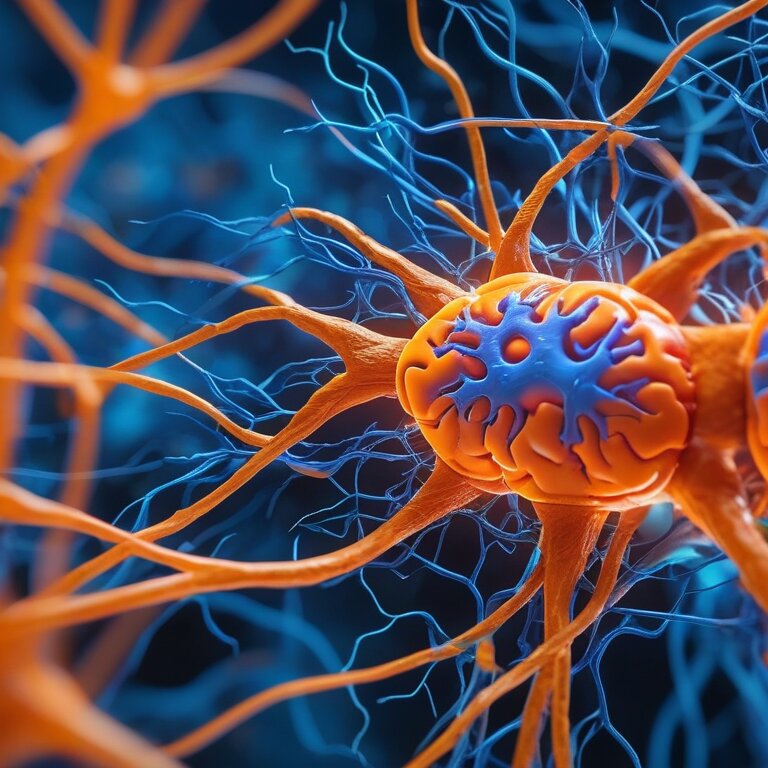
Leviticus: If we look at the neural network, we see neurons firing in two different frequencies.
The Electric Blue frequency (Autism) provides the pattern recognition and the deep-dive stability. The Vibrant Orange frequency (ADHD) provides the lateral thinking and the rapid-response creativity. In an AuDHD brain, these frequencies don’t just exist side-by-side; they weave together into a single, high-density network.
The Calm Center (Regulation Strategy)
Riot: To survive as an AuDHDer, you need a Calm Center. This is a shielded space—mental or physical—where you can let both cores run without blowing a fuse.
Leviticus: The AuDHD Regulation Protocol:
- Stimulation Stacking: Use a low-level “background stim” (like a fidget spinner or lo-fi music) to satisfy the ADHD core, allowing the Autistic core to lock into deep work.
- Constraint Framing: Give yourself “strict boxes” (Autism) but fill them with “variable content” (ADHD). Set a 20-minute timer for a task, but allow yourself to approach the task from any angle you want.
- Low-Latency Transitioning: Don’t try to “stop” one task and “start” another. “Fade” them. Listen to music associated with the next task while finishing the current one.

Stepping Through the Gate
Riot: Accepting an AuDHD identity is like stepping through a futuristic star-gate. On the other side is a world where “disordered” is replaced by “Multidimensional.”
You aren’t a broken version of either neurotype. You are a unique synthesis of two powerful ways of being. You are the organized chaos. You are the high-speed precision. You are AuDHD.

AuDHD Performance Data:
- Executive Function Cost: Extremely high. Requires manual management of “Decision Fatigue.”
- Creative Output: Significantly higher than either mono-type, provided the environment is sensory-safe.
- Novelty Threshold: Requires a “Change Variable” every 2-3 hours to maintain engagement.