I’m not too much; this room is underbuilt.

Finding out you’re autistic as an adult isn’t some cute “discovery” like finding a $20 bill in an old jacket. It’s a fucking extraction. You’re finally pulling the jagged, rusted pieces of neurotypical expectations out of your identity, and yeah, it’s going to bleed. You’re going to be angry. You’re going to be exhausted. And eventually, you’re going to be autonomous.
Everyone wants to talk about the “relief.” They want the lightbulb moment where suddenly everything makes sense and you can finally “be yourself.” And sure, that’s there. But let’s cut the shit: Relief is only 10% of the process. The other 90% is a messy, loud, and often painful deconstruction of every single “should” you’ve ever used to survive.
If you’re reading this, you’ve probably spent decades trying to fit into a room that was fundamentally underbuilt for your nervous system. You’ve been told you’re too loud, too intense, too sensitive, or “too much.”
Hard truth: You aren’t too much. The room is just small.
Section 1: The Grief Loop (The Anger You Weren’t Allowed to Have)
Most late-diagnosed people go through a specific kind of grief that doesn’t follow the “stages” you read about in textbooks. It’s a loop. It’s a recursive cycle of “What if?” and “How the fuck did they miss this?”
The Anger at the System
You’re allowed to be pissed off. In fact, if you aren’t pissed off, you’re probably still masking your emotions. You spent 20, 30, or 40 years fighting a war you didn’t know you were in, with a weapon you didn’t know you were missing. You were judged by standards that were never meant for you.
Think about the school systems that failed to see your sensory distress and labeled it “behavioral issues.” Think about the bosses who tone-policed your directness while praising your efficiency. That anger isn’t “dysregulation”; it’s data. It’s your body finally recognizing a lifelong injustice.
The Grief for the Unlived Life
This is the heavy part. The version of you that could have been if you’d known at seven instead of thirty-seven. The version of you that didn’t have to experience three burnouts before figuring out why the office lights felt like physical assault.
We grieve the education we didn’t pursue, the relationships we struggled to maintain because we were drowning in social exhaustion, and the self-esteem we never built because we were too busy trying to be a “normal” person.
No mask, just method. We don’t sit in the grief to rot in it; we sit in it to recognize what was stolen so we never let them take it again.
Section 2: The “Lightbulb” Myth (And Why It’s Bullshit)
People think a diagnosis is a light switch. Click. Now you’re fixed! Now you have a label, so you can just “manage” it.
Cute, but no.
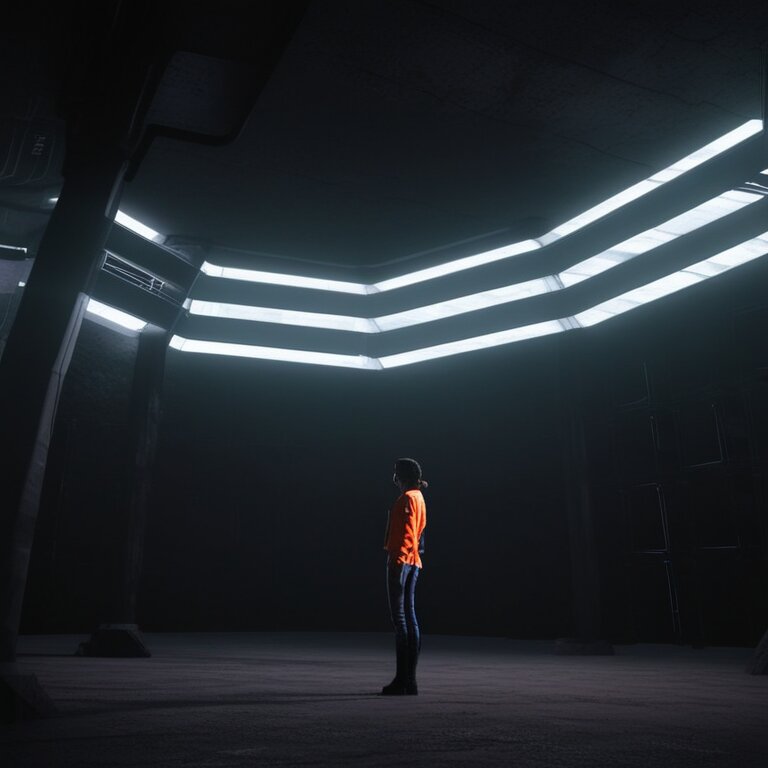
A diagnosis is more like a map of a house you’ve lived in your whole life but only ever navigated in the dark. You finally know where the walls are, where the floor is rotting, and where the windows are hidden. But you still have to learn how to walk through those rooms without bruising your shoulders. The “relief” is just the starting line, not the finish.
The “discovery” usually leads to a period of total identity collapse. If you’ve been masking since you were five, you don’t even know who “you” are. You know who the “socially acceptable performance” of you is, but the core? The core is buried under layers of scripts, sensory suppression, and fake smiles.
Stopping the mask is terrifying. It means letting people see the stimming. It means stopping a conversation mid-sentence because the room is too loud. It means being “weird” on purpose because “normal” is killing you.
Section 3: The Rebuild (Deconstructing the “Shoulds”)
Once you’ve cleared out the wreckage of the identity you were forced to wear, you start the rebuild. This isn’t about “fitting in” better; it’s about belonging on your own settings.
Part A: Auditing Your Habits
Start looking at every single thing you do. Ask yourself: “Do I actually like this, or is this a script I learned to avoid negative feedback?”
- The Social Script Audit: Do you actually like small talk? Or do you do it because you’re afraid of the silence?
- The Sensory Audit: Does your house feel like a home, or does it feel like a neurotypical showroom that stresses you the fuck out?
- The Work Audit: Are you working the way you work best, or are you working the way your boss thinks looks “professional”?
Part B: Find Your Aesthetic (Protagonist Energy)
For a lot of us, late diagnosis means finally dressing for our sensory needs. If you’ve been wearing restrictive, “professional” clothes that make you want to scream, stop. No mask, just method.

Riot’s rule: Flashy clothes are for protagonist energy, not for other people’s attention. If wearing bright pink platform boots and a holographic jacket makes you feel like you have a protective layer of armor against the world, wear it. If you need soft, tag-free fabrics to keep your skin from crawling, make that your uniform.
Part C: Rotate Your Intensity (The EDM/Punk Regulation)
Neurotypical advice says “consistency” is the key to health. They want you on a steady, medium-level output every single day.
Fuck that.
We are people of extremes. We operate in high-novelty, high-intensity bursts followed by total silence.
- The Release: Go to the EDM show. Go to the punk show. Dance until your muscles ache and the bass vibrates the thoughts right out of your skull. That isn’t “overstimulating”; for many of us, it’s a massive sensory release that resets our baseline.
- The Recovery: Then, go into total silence for 48 hours. No talking. Low lights. Weighted blankets.
This isn’t “dysfunction.” It’s a rhythmic optimization of your energy budget.

Section 4: The Radical Independence Protocol (The Room-Builder)
This is the core of our philosophy. Most autism advice is about how to adapt to the room. We are about how to build the room.
The Protocol
My existence isn’t a debate. If someone doesn’t like my intensity, they aren’t “bad,” they’re just in the wrong room. My job isn’t to shrink myself to fit their walls; my job is to walk out and find (or build) the room where I fit.
How to apply it:
- The Energy Budget is God: If a social event costs more than I have in the bank, I don’t go. I don’t apologize. I don’t explain. I just decline.
- Standardize the Strange: High-fidelity earplugs are standard gear. Stimming is a non-negotiable regulation tool. If you can’t handle me flapping my hands while I explain a complex strategy, you don’t get the strategy.
- Default to Disregard: If a person’s opinion doesn’t have a direct impact on my physical safety or my ability to pay my bills, it is statistically insignificant noise. Drop the noise, keep the signal.
Section 5: Scripts for Real Moments
You need scripts because your brain is already busy processing sensory data. Don’t waste “bandwidth” inventing sentences in the moment.
When someone says, “But you don’t look autistic!”
“That’s because my mask was expensive and it almost killed me. I’m currently opting for ‘method’ instead of ‘masking’—it’s much more sustainable and a lot more fucking fun.”
When you need to leave a social event early
“I’ve hit my sensory threshold for the night. I’m heading out to protect my energy budget so I don’t crash tomorrow. See you another time.”
When you’re stimming and someone looks confused
“This is how my brain regulates sensory input. It’s a feature, not a bug.”

Section 6: The Aftercare / Reset Plan (The 48-Hour Protocol)
The “Post-Discovery Social Hangover” is real. When the weight of your new identity feels heavy, or after you’ve been “on” for too long:
The First 12 Hours: Total Input Shutdown
- Silence: No music, no podcasts, no “ambient noise.” Just earplugs or noise-canceling headphones.
- Darkness: Dim the lights. Use the red LED settings if you have them.
- Physical: Weighted blankets. Soft textures only. No restrictive waistbands.
The Next 24 Hours: Controlled Novelty
- Same-Foods: Eat the same meal three times. Take the decision-fatigue out of the equation.
- Special Interests: Dive back into the thing that makes your brain feel “correct.” Don’t worry about being productive.
- Minimal Output: Do not answer texts. Do not check emails. The world can wait for your energy budget to recover.
Try This Tonight: The Sensory Win
Go through your closet. Find the one item of clothing that makes you feel “correct” (socially acceptable, “professional,” “cool”) but feels like sandpaper on your skin or makes you hold your breath.
Throw it away. Or give it to a neurotypical friend who doesn’t mind the itch.
Choosing the “sensory win” over the “social win” is the first step in the Rebuild. It’s a small, rebellious act of radical independence.
Welcome to the extraction. Let’s get to work.
Checklist: If you only do 3 things
- Buy the Earplugs: Not the cheap foam ones. The high-fidelity ones that let you hear the music but drop the noise.
- Audit One Habit: Pick one thing you do “to be polite” and stop doing it for a week. See what happens to your energy.
- Declare an Exit: Next time you go out, decide your “hard leave” time before you even put on your shoes. Stick to it.