Autism doesn’t expire when you turn eighteen.

If you’ve spent your life feeling like you’re “doing human wrong,” and you’ve finally started connecting the dots toward autism, you’ve probably run into some absolute bullshit. You’ve probably heard people—even doctors—say that “If you weren’t diagnosed as a kid, you can’t be autistic” or “You have a job and a social life, so you’re clearly fine.”
Let me be extremely fucking clear: Autism is a neurotype, not a temporary childhood condition.
You don’t “grow out” of a different brain structure. You just learn how to hide it better. You learn how to mask, how to compensate, and how to survive in a world that wasn’t built for your settings. If you’re an adult looking for answers, you aren’t “too late.” You are right on time for the most important identity reclaimation of your life.
Section 1: The Problem (The Pediatric Lens)
Most diagnostic criteria for autism were written by neurotypical men in the 90s watching white boys play with trains. They were looking for external “deficits”—lack of eye contact, hand-flapping, and a failure to “play correctly.”
This lens completely misses the adult experience.
- It misses the woman who has manually calculated every social interaction since she was six.
- It misses the professional who is highly successful at work but collapses into a sensory meltdown the second they hit their front door.
- It misses the AuDHDer who is “too high-functioning” for support but “too weird” for the neurotypical world.
When people ask “Can adults be diagnosed?”, they are really asking “Is my internal experience valid if nobody noticed it for thirty years?” The answer is yes.
Section 2: Why It Happens (The Masking Lag)
You weren’t diagnosed as a kid because you were too busy surviving. You likely developed “Advanced Masking Protocols” before you even hit puberty. You learned that if you toned down your intensity, suppressed your stims, and mimicked the “normal” kids, the rejection would stop.
The problem is that masking is a survival reflex, but it isn’t an identity. By the time you hit your 20s or 30s, the “Masking Lag” starts to kill you. You’re exhausted, you’re hitting burnout, and you have no idea who is actually underneath the performance.
Section 3: The Identity Reclaimation
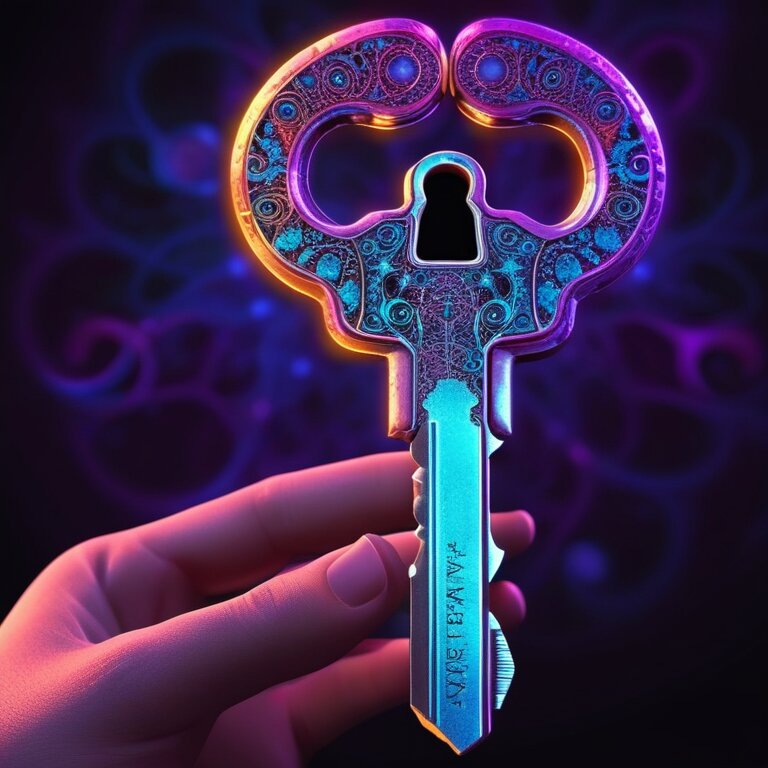
Finding out you’re autistic as an adult isn’t about getting a “label.” It’s about getting the Key to the Room.
The Riot Protocol for Validation:
- Stop Asking for Permission: You don’t need a doctor’s permission to start accommodating your sensory needs today. If the lights hurt, turn them off. If the tag is itchy, cut it out.
- Re-contextualize the “Failures”: Every time you felt “lazy,” “over-sensitive,” or “difficult,” you were actually just a neurodivergent person operating without air conditioning in a desert.
- Find the Protagonist Energy: You aren’t “recovering” from autism; you’re specializing in yourself.
Section 4: What to Avoid (The Beige Trap)
When you start the diagnostic journey, you will encounter the “Beige Clinics.” These are the places that treat autism like a tragedy or a medical error.
- Avoid the “Deficit-Bred” Assessor: If they only ask about what you can’t do, they are missing the point. You want an assessor who asks how you experience the world.
- Don’t Let Them Gaslight Your Success: If a doctor says you can’t be autistic because you have a degree, that doctor is objectively wrong and likely a fucking idiot. Success is a compensation strategy, not a cure.
- Don’t Apologize for the Information: Many adults walk into an assessment with a 40-page binder of data. A good clinician will love that. A bad one will call it “obsessive.” Choose the one who loves the data.
Section 5: The Validation Stamp
You deserve to hear it: You aren’t broken. You aren’t a “failed” neurotypical person. You are a high-fidelity neurodivergent adult.

Why the Label Matters:
- Legal Protection: In many places, a formal diagnosis provides you with ADA or equivalent workplace protection. Use it.
- Community Access: It gives you a seat at the table with other people who speak your language.
- The End of Self-Gaslighting: It’s the final evidence that the “friction” you’ve felt your whole life wasn’t your fault.
Section 6: Specific Scripts for Identity Boundaries
When someone says “But you don’t look autistic”
“That’s because you’re seeing the result of thirty years of professional-grade social masking. My external performance doesn’t change my internal hardware. I’m autistic, and this is what it looks like.”
When a doctor dismisses your concerns
“Your assessment of my ‘functioning’ is based on surface-level observations. I am reporting significant cognitive friction and sensory overload that is impactng my quality of life. I need an assessment that accounts for high-masking adult presentations.”
Explaining your self-diagnosis to a friend
“I’ve spent the last six months deep-diving into the adult autistic experience, and the data fits my life perfectly. This isn’t a new ‘problem’; it’s the answer to a question I’ve been asking since I was six. I’m stopping the performance. I’m coming home to my own settings.”

Section 7: The Final Word (Let’s Build the Room)
The world is underbuilt for us, but that doesn’t mean we have to stay outside.
Run this audit right now:
- Are you still waiting for a doctor to tell you it’s okay to care for yourself? (Stop that shit.)
- Can you identify one moment this week where you were 100% unmasked?
- Do you believe, in your core, that your brain is beautiful?
If the answer to that last one isn’t a “Fucking Yes” yet, keep reading. We’re building a bigger room.
If You Only Do 3 Things
- Reclaim the Identity. Adult diagnosis is about the truth, not the tragedy.
- Stop the Performance. Your energy is too valuable to spend making boring people comfortable.
- Bring the Noise. Connect with the community. Find the vibrant, loud, stimming adults who are already living the life you want.
Welcome to the Rebellion. Let’s build the room.