Support is not a backup plan. It’s the engine.
If you’re an adult navigating the simulation with AuDHD hardware, you’ve likely spent most of your life being the one who “doesn’t need help.” You were the “low-maintenance” player who never complained about the lag.
The problem with being low-maintenance is that eventually, the engine seizes up because nobody—including you—was checking the metabolic oil. That’s a worst-case Ontario for your long-term uptime.
Adult autism support is the most misunderstood area of the simulation. Most people think it’s about “therapy” taught by an NPC in a beige office. We view it differently. To us, support is the Infrastructure and the Community that allows you to exist at 100% capacity without the constant threat of a system failure. It’s not rocket appliances.
Section 1: The Support Void (System Friction)
Leviticus: Most support systems for autistic adults are designed for “Compliance,” not for “High-Fidelity Output.” They focus on making you more palatable to the NPC population rather than making the simulation more usable for you.
Riot: And when you operate in a “Support Void,” you are effectively running on a battery that never hits 100%. You’re always one unexpected social interaction or sensory spike away from a total system collapse. You aren’t “independent”; you’re just Unbuffered.
Section 2: Why It Happens (The Hyper-Independence Glitch)
Leviticus: Many of us developed “Hyper-Independence” as a defense protocol. If you can’t rely on the simulation to fit your hardware, you learn to never ask the room for anything.
Riot: Breaking the support void requires a shift in your player profile. You have to move from Survival Soloing to Strategic Scaling.

Section 3: The Alchemist Take (The Infrastructure Model)
Leviticus: I don’t look for “support” in people’s emotions; I look for it in Logistics and Resource Management. If my support system doesn’t have a clear ROI in terms of my metabolic budget, it is a data leak.
The Support Pillar Framework:
To be sustainable, an Alchemist must build four specific infrastructure layers:
- Sensory Infrastructure: The physical tools that maintain your neutral baseline (e.g., smart lighting, high-fidelity headsets).
- Cognitive Infrastructure: The protocols that handle your executive function (e.g., automation, AI-driven scheduling).
- Medical Infrastructure: A network of providers who understand neuro-queer hardware and don’t require you to mask.
- Professional Infrastructure: The formal accommodations that protect your high-fidelity output.
Section 4: Riot Take (The Collective Care Model)
Riot: Leviticus is right about the hardware, but you can have the best motherboard in the world and still be miserable if you’re lonely. For me, support is about Collective Care and Neural Belonging. It’s about having a pack that speaks your language.
The Reality of Care:
- Zero-Demand Friendship: Players who understand that “support” sometimes means sitting in the same room for four hours without saying a word (Parallel Play). No social friction, just existence.
- Mutual Stimming Joy: Support is having a community that celebrates your high-vibration energy instead of asking you to “tone it down.”
- Handover Protocol: Knowing that if you hit a shutdown in public, there is someone who will immediately build a human buffer and get you to the “protocol zone” without judgment.
Section 5: Where We Disagree
Leviticus: I believe your primary support system should be autonomous and system-based. People are variable and unpredictable data points; code and hardware are reliable. If you rely too heavily on “community,” you are vulnerable to social friction.
Riot: I think that’s a lonely way to run the simulation. Systems don’t love you. When you’re in a deep burnout, you don’t need a better calendar app; you need a friend who will bring you a sensory-safe meal and leave it at your door without requiring a social exchange.
Section 6: Shared Practical Framework (The Support Audit)
Despite our differences, we agree that you need to audit your Safety Buffer every 90 days.
1. The Metabolic Leak Test
Identify the top three things that drain your “battery” every week. If your current support system isn’t addressing those three things, it is an inefficient use of resources.
2. The “Hard No” Capacity
Does your support system allow you to say “No” to high-demand social or professional tasks without losing your status? If you can’t say no, you aren’t supported; you’re being throttled.
3. The 70/30 Blend
A high-performance adult needs a Strategic Blend. 70% of your support should be automated, predictable systems. 30% should be high-vibration, trusted human connections.
Section 7: Scripts for Support Scaling
Setting up a “Zero-Demand” communication protocol
“I’m currently optimizing my metabolic budget to avoid a burnout cycle. This means I’m moving to a ‘Zero-Demand’ text-only communication style for the next two weeks. I appreciate your support in letting me reply at my own pace—no social noise required.”
Asking for “Parallel Play” Support
“I’m hitting a sensory deficit but I don’t want to be alone. Would you be down for a ‘Parallel Play’ hang tonight? We can just be in the same simulation space doing our own thing with zero social friction. I’ll provide the snacks.”
Reaching out during a system redline
“Data point: My metabolic reserves are at <5%. I am entering an emergency recovery protocol. I need [Specific Task] and 24 hours of radio silence. I’ll signal when the recalibration is complete.”

If You Only Do 3 Things
- Automate the friction. If you’re wasting executive function on repeating tasks, you’re burning money. Support yourself with systems first.
- Find your 100% Unmasked community. One hour with people who speak your language is worth 10 hours of traditional NPC therapy.
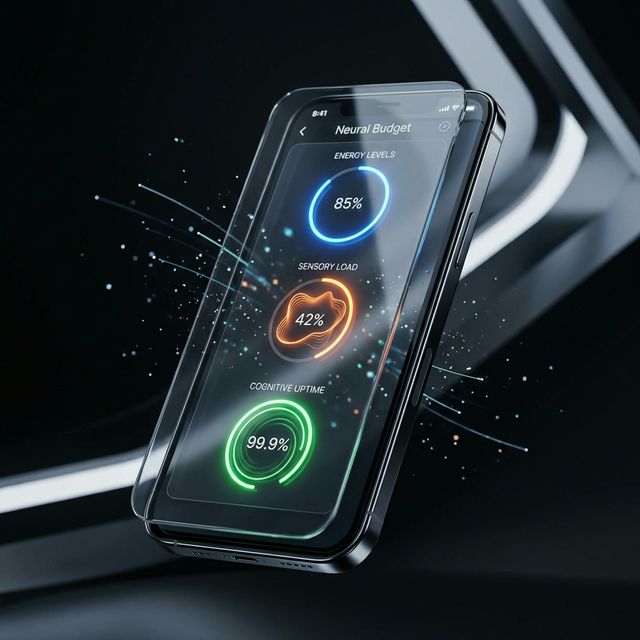
- Audit your metabolic battery daily. Don’t wait for the engine to seize before you check the support oil.
Welcome to the Resilient Baseline. Let’s calibrate the room.