Run the pattern, not the panic.

You just received the diagnostic verification. You’re autistic. Or AuDHD. Or you’re a high-fidelity player who has finally realized you’ve been trying to run a complex simulation on basic corporate hardware. That’s a worst-case Ontario for your motherboard.
After the initial hit of “everything makes sense now,” the next wave is usually: What now?
The internet is full of emotional processing guides written by NPCs who don’t understand the mechanics. This isn’t one of them. Emotional processing is necessary, but it’s inefficient if your environment is still actively bleeding your metabolic budget. This guide is about logic. You have a new set of data points about how your hardware processes the simulation. Now we use them to transmute the friction into usable energy.
Make it usable.
Section 1: The Simulation Glitch (Data Overload)
Most newly diagnosed players make the same mistake: they try to patch the entire simulation at once. They buy every sensory tool on TikTok, they disclose to everyone in their social circle, and they try to unmask 30 years of survival scripts in a single weekend.
This leads to a secondary burnout. The goal isn’t to be “more autistic.” The goal is to make the simulation usable. It’s not rocket appliances.
When you first get the data, your brain goes into high-bandwidth processing mode. Every memory from the last three decades is being re-indexed through the “Alchemist lens.” That elementary school incident? Sensory mismatch. That weird breakup? Communication protocol error. That time you quit your job on the spot? Systemic metabolic failure.
This re-indexing takes massive CPU power. If you try to run “Identity Rebuild 2.0” while also maintaining “Neurotypical Performance 1.0,” your system will crash.
Section 2: Why It Happens (The Re-contextualization Gap)
Your brain is currently re-tracing every memory through a new lens. Every “fail” is being re-labeled as a “sensory mismatch” or a “communication gap.”

The Energy Transmutation Trap
For years, you have been subconsciously suppressed. You didn’t know the lights were too bright; you just knew you had a headache by 3 PM. You didn’t know the office chatter was exhausting; you just knew you needed three drinks to feel “normal” on a Friday night.
Now that you know the lights are the problem, you can’t “un-know” it. Your tolerance for sensory noise will likely drop. This isn’t you getting “more sensitive”; it’s the suppression mechanism finally giving up. You spent your metabolic budget on hiding the pain; now that energy is going toward the realization that the pain is just inefficient data.
Keep the signal, drop the noise.
Section 3: The 5-Step Tactical Strategy (The Core)
This is the optimization framework. Follow the sequence. Do not skip steps.
Step 1: Stop the Bleed (Environment Optimization)
Identify the one environment that drains you the most. Usually, it’s the workplace or the grocery store simulation. Apply one sensory accommodation immediately.
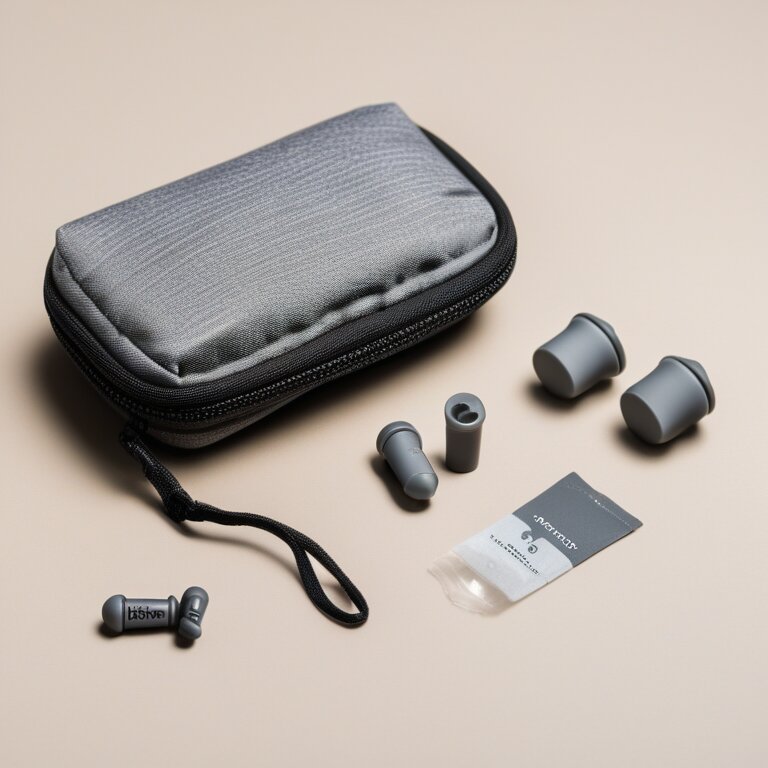
- Earplugs: High-fidelity, not foam. I use them in every public space to filter the social noise.
- Lighting: If you can’t change the office lights, wear polarized lenses.
- Protocol: Plan the extraction before the entrance. Know exactly when you are leaving before you step into the room.
Step 2: Audit Your Patterns (Data Collection)
For one week, track your “Baseline.” Note when you hit “The Wall”—the moment where your CPU stops being able to process verbal input.
- Variable 1: Light levels.
- Variable 2: Sound levels/complexity.
- Variable 3: Social ambiguity (How many people were “implying” things?).
Don’t analyze yet. Just collect the data. You are looking for the pattern of your systemic collapse.
Step 3: Establish Non-Negotiables
Decide on three things that are now mandatory for your survival. These are your hard lines in the simulation.
- The Silence Window: 60 minutes of zero verbal input after work.
- The Grocery Protocol: Headphones on, list ready, zero eye contact with the NPC population.
- The Exit Clause: You have a pre-written script for every social event that allows you to leave at the 90-minute mark without explanation.
Step 4: Selective Disclosure (Communication Strategy)
You do not owe the simulation your medical history. Disclosure is a tactical decision, not a moral obligation.
- Need to Know: HR (if you need accommodations), your primary teammates (if you want the project to succeed).
- Want to Know: Players you actually like.
- Irrelevant: Everyone else.
Step 5: Build Your Toolkit (Tactical Gear)
Initialize a physical kit. If you have to think about where your earplugs are, you’ve already lost the battle.
Section 4: Decision Frameworks (If/Then Logic)
Use these to bypass the manual processing of social situations.
The “Should I Disclose?” Framework
- IF the environment is damaging my hardware AND I can’t leave THEN disclose to HR for legal protection.
- IF the person is a close teammate AND I want to stop masking around them THEN disclose the “What” (the support need) before the “Label.”
- IF the person is a random surface-level contact THEN do not disclose. Simply state the protocol (e.g., “I process better via email”).
The “Should I Attend?” Framework
- IF the energy cost (travel + sensory + social) > 40% of my total weekly budget AND it’s not for a core mission goal THEN decline.
- IF I cannot find a clear extraction route on the map THEN do not enter.
Section 5: The ‘Default to Disregard’ Protocol
This is how you handle the fallout of being a non-compliant player.

If an opinion doesn’t have a direct impact on my physical safety or my metabolic budget, it is statistically insignificant.
People will have thoughts about your new boundaries. They will think you’ve become “difficult” or “less fun.” They will have opinions on your shades and your earplugs indoors.
Run the data, not the drama.
If their opinion doesn’t pay your rent, it doesn’t get a seat at the table. If their need for you to be “normal” outweighs your need to be healthy, they aren’t your teammate. They’re social noise. Drop the noise.
Section 6: Scripts for Early Navigation
Don’t invent sentences. Use these templates.
For Workplace Accommodations (Email)
“I’m currently optimizing my workflow for peak cognitive performance. To facilitate this, I will be using noise-reduction tools during deep-work blocks and I’d like to move our check-ins to [Text/Email] to ensure clear documentation of action items.”
For Social Settings (The Extraction)
“I’ve hit my capacity for high-stim environments today. I’m heading out to protect my reset protocol for tomorrow. Making it usable. Goodnight.”
For Family (The Boundary)
“I’m learning how my brain actually processes social complexity. To make these visits sustainable, I’ll be taking regular breaks in a quiet space and I’ll be heading out at [Time]. It’s not personal; it’s physics.”

Section 7: Recovery Protocol (The 24-Hour Reset)
If you have overspent your metabolic budget, you must apply the low-input reset immediately. Delaying the reset only increases the interest rate on your neural debt.
- Phase 1 (The Shutdown): Zero lights. No screens. No audio. High-protein, low-prep food only. 4 hours minimum.
- Phase 2 (The Reset): One high-interest activity (Special Interest). Minimal verbal output.
- Phase 3 (The Check): Evaluate tomorrow’s calendar. If there is a high-demand meeting, cancel one other social item to balance the books.
If You Only Do 3 Things
- Make it usable. Focus on your physical environment (Light, Sound, Texture) before you worry about your internal identity.
- Keep the signal, drop the noise. Your diagnosis is for you to understand you. Anyone else’s opinion on your autistic traits is data you didn’t ask for.
- Plan the extraction before the entrance. You never walk into a room without knowing exactly how you are going to leave it. Control the exit, control the energy.